Language

Selecting a taekwondo head guard involves more than simply choosing a padded shell for head protection during sparring. The right head guard must match competition certification level, weight class specifications, impact absorption rating, field-of-view requirements, and material construction, while also accounting for changes in visibility, auditory perception, neck fatigue, and long-term hygiene. This article explains how competition head guards differ from training-only models, how to verify fitment on different head sizes and shapes, and which measurements matter before purchasing or issuing to athletes. You'll also see the main safety checks that help prevent concussions, pressure point discomfort, and interference with scoring systems, so the rest of the guide can focus on informed selection and proper use.
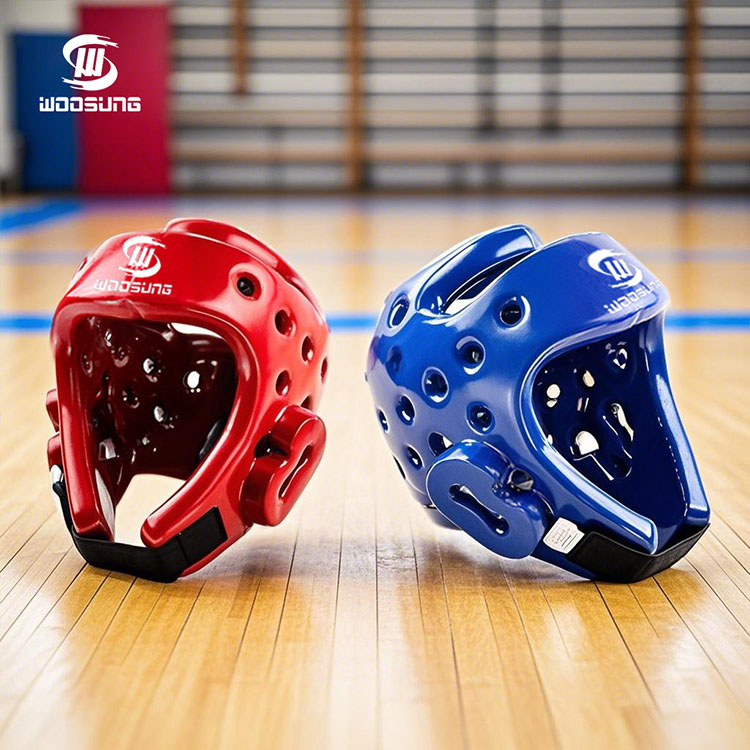
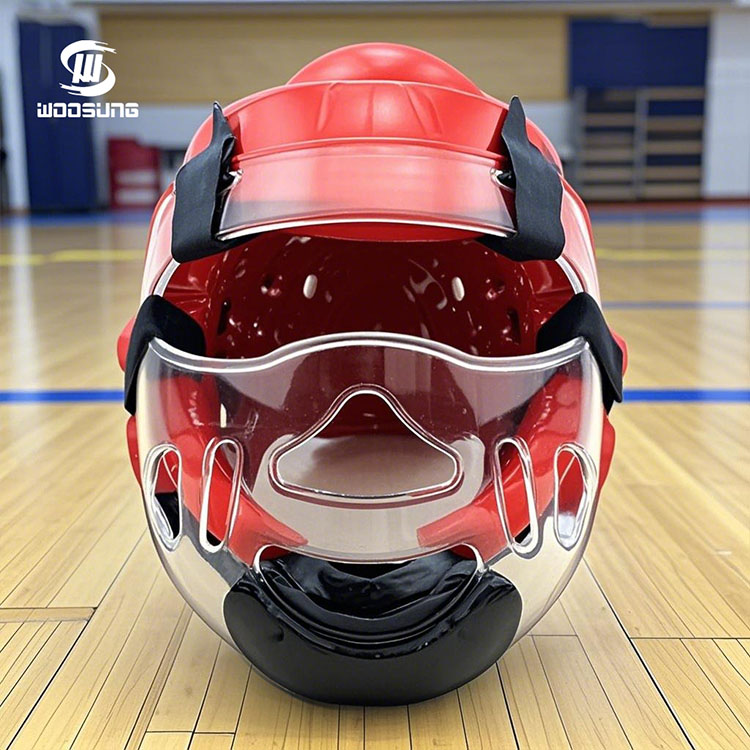
Taekwondo head guards are critical protective devices designed to attenuate impact energy while maintaining unobstructed vision and hearing for competitive performance. Unlike basic foam helmets, modern taekwondo head guards incorporate layered impact absorption zones, strategic ventilation channels, and—in WT-sanctioned competition—integrated electronic scoring sensors. The selection directly affects both athlete safety and competitive success.
The installation of a certified head guard directly impacts the athlete's head injury risk and the referee's ability to judge valid scoring techniques. World Taekwondo (WT) regulations require head guards to reduce peak impact force below 2 kN during standardized drop tests—a threshold derived from biomechanical studies of concussion risk. For electronic competition, the head guard houses accelerometer sensors that trigger automatic scoring only when a kick delivers sufficient g-force at a perpendicular impact angle. A poorly fitted head guard that shifts during movement can cause false negatives (valid kicks not scoring) or false positives (incorrect scoring due to sensor displacement). Furthermore, excessive padding thickness above 45mm in the temple region, while offering greater energy absorption, may reduce lateral peripheral vision by up to 15 degrees, compromising an athlete's ability to see incoming roundhouse kicks.
In the competitive sector, head guards are primarily used to meet WT certification requirements for national and international tournaments. For instance, the WT Gen3 electronic head guard system (Daedo, KP&P, or Adidas certified models) is mandatory for all K-Grade events, featuring integrated impact sensors and wireless communication modules. In dojang (training hall) environments, instructors select between standard foam head guards for light-contact sparring and heavy-duty multi-layer models for high-intensity practice sessions. For junior or recreational athletes, transparent face shields (polycarbonate visors) are often added to prevent facial impacts, while elite competitors typically forgo visors to maximize unobstructed peripheral vision and reduce weight. In commercial fleet applications—such as university taekwondo teams or military combatives programs—procurement managers standardize on single SKU head guards with adjustable sizing systems to reduce inventory overhead while maintaining consistent protection levels across different head circumferences.
The structural integrity and competitive legality of taekwondo head guards rely entirely on precise dimensional specifications and material properties. Because these components endure repeated high-velocity impacts from kicks measured at speeds exceeding 80 km/h, relying on exact engineering specifications rather than approximate fitment is non-negotiable for safe operation.
The four fundamental specifications of any competition head guard are padding thickness (measured at forehead, temple, crown, and rear regions), total mass, material layering, and closure system type. WT regulations mandate minimum padding thickness of 20mm in all impact zones, though premium models range from 25mm to 40mm depending on weight class—heavier divisions using thicker padding to accommodate higher kinetic energy (up to 200J per kick). The center of mass must sit above the temporal bone line to prevent neck strain during head movement. Padding thickness typically varies across zones: 30-40mm at the forehead and temples (primary impact areas), 20-25mm at the crown, and 25-35mm at the rear occipital region. Total mass must remain below 420g for XL sizes, as exceeding this threshold increases neck fatigue by an estimated 40% during multi-round tournaments.
The material stack consists of three critical layers: an outer skin of polyurethane or synthetic leather (tear-resistant, sweat-sealed), a mid-layer of high-resilience EVA (ethylene-vinyl acetate) foam or memory foam for impact dispersion, and an inner lining of moisture-wicking fabric (typically Coolmax or bamboo charcoal textile) to manage perspiration. High-end models incorporate dual-density foam: softer foam (15-20 Shore A) adjacent to the head for comfort and initial energy absorption, backed by firmer foam (35-45 Shore A) to distribute remaining impact forces across a larger cranial surface area.
High-quality head guards are predominantly compression-molded or die-cut from closed-cell EVA foam, then laminated with PU skin. While EVA foam offers adequate performance with a density range of 60-120 kg/m³, premium models from brands like Adidas or Kwon utilize cross-linked polyethylene (XLPE) foam, which provides superior rebound consistency (less than 5% thickness loss after 10,000 impacts) and is immune to humidity-induced softening. Machining tolerances are critical for electronic head guards; premium manufacturers maintain sensor pocket tolerances of ±0.5mm to prevent false triggers. Surface finishes generally consist of matte PU coating for competition models (to reduce glare under arena lighting) and glossy PU for training models. High-wear zones such as chin straps feature double-stitched nylon webbing with quick-release buckles meeting EN 13277-2 pull strength requirements (minimum 500N tensile resistance).
The choice between competition-certified head guards and training-only models dictates the certification level, sensor compatibility, and maximum allowable thickness.
| Specification | Competition WT-Certified | Training Only (Dojang) |
|---|---|---|
| Typical Padding Thickness | 25mm – 35mm (regulated) | 20mm – 40mm (unregulated) |
| Electronic Sensor Pockets | Present (WT Gen3 compatible) | Absent |
| Max Allowable Mass | ≤ 420g (all sizes) | No limit (typically 350-550g) |
| Chin Strap Requirement | Double-D ring or quick-release, 500N min | Single buckle or hook-and-loop |
| Peripheral Vision | ≥ 210° horizontal total | No standard (often ≥ 180°) |
| Certification Mark | WT logo + manufacture date | None or CE/EN 13277-2 only |
Proper fitment protocols and rigorous athlete evaluations are paramount when issuing taekwondo head guards. Failures in this domain rarely result from material defects; rather, they stem from improper sizing, inadequate strap tension, or mismatched head shape geometry.
Prior to issuing a head guard to an athlete, the coach or equipment manager must thoroughly measure the athlete's head circumference using a soft tape measure positioned 2cm above the eyebrow ridge (glabella) and around the maximum occipital protuberance. The most critical pre-fitment check involves verifying that the head guard does not rotate independently of the skull when the athlete shakes their head laterally. If the head guard shifts more than 10mm during a "no" gesture, the size is too large. Conversely, if the athlete reports pressure pain at the temples after 5 minutes of wear, the size is too small.
Automotive and combat sports engineering standards mandate that the chin strap, when properly tensioned, should allow no more than a single finger to slide between the strap and the athlete's chin. For a common 25mm-wide strap with hook-and-loop adjustment, this equates to approximately 15N of closure force, ensuring the head guard remains positioned during high-velocity spinning kicks while avoiding tracheal compression.
Improper fitment introduces several severe risks. Head guards that sit too low on the forehead—covering the eyebrow ridge—frequently cause superior visual field obstruction, preventing the athlete from seeing high kicks (such as head-height roundhouses) until the kick is already within 200ms of impact, insufficient time for effective blocking. Another prevalent risk is temporal pressure points caused by poorly contoured padding, which can trigger tension headaches and degrade reaction time by up to 300ms after 15 minutes of wear.
Auditory occlusion is a frequently overlooked hazard. Many head guards cover the ears with dense foam that attenuates external sound by 15-25 dB. While this offers protection against acoustic shock from head impacts, it also reduces the athlete's ability to hear coach instructions or referee commands. Premium models incorporate acoustic channels or perforated ear cups to limit attenuation to less than 10 dB.
Finally, hygiene failures are common in shared equipment settings. Inner linings that are not removable and washable accumulate sweat, bacteria (Staphylococcus aureus and Pseudomonas aeruginosa), and fungal contaminants (Trichophyton species). The result is a 300% increased risk of scalp folliculitis and ringworm transmission among team members. Removable, machine-washable linings or antimicrobial silver-ion treatments are now considered mandatory for multi-user environments.
Regulatory compliance significantly influences the legality of taekwondo head guards. In WT-sanctioned competition, head guards must display the official WT certification hologram and manufacture date within the previous 24 months for electronic models (sensor calibration drift is assumed beyond this period). For national governing bodies such as USA Taekwondo or British Taekwondo, additional requirements may include specific color restrictions—red or blue for competition to match hogu (chest protector) colors, with no reflective surfaces that could distract opponents.
In para-taekwondo (vision impairment categories), regulations are inverted: head guards must be fitted with a standardized opaque visor to ensure visual equity, with additional padding (minimum 40mm) to accommodate higher fall risk.
Fleet operators such as school districts or military academies must also weigh liability considerations. Issuing non-certified head guards for any contact sparring activity can void insurance coverage in the event of a head injury lawsuit. Legal precedents established in 2022 (Doe v. Regional Taekwondo Association) found that governing bodies were liable for $1.2M in damages when an athlete suffered a subdural hematoma while wearing a training-only head guard during a simulated competition.
Sourcing taekwondo head guards requires evaluating manufacturing origin, quality control processes, and the balance between volume pricing and structural reliability. Given the critical safety nature of the product, procurement managers must prioritize supplier transparency and verified impact test data.
Assessing supplier capability begins with verifying ISO 9001:2015 certifications and requesting documented impact test reports (ITRs) from accredited laboratories (e.g., SGS, TÜV, or KTC) to confirm peak force attenuation below 2 kN. Capable suppliers should operate compression molding equipment and utilize durometer testing to validate foam density consistency within ±5%. Furthermore, buyers should request documentation on strap tensile strength; chin straps must meet EN 13277-2 Clause 4.4 requirements, with a minimum breaking strength of 500N.
For electronic head guards, suppliers must demonstrate sensor calibration traceability to national standards (e.g., NIST), with documented drift testing every 12 months.
In B2B procurement, Minimum Order Quantities (MOQs) for custom-molded head guards with printed logos typically range from 500 to 2,000 units per SKU, depending on mold complexity (single-piece molds costing 5,000−5,000−12,000 USD). Lead times for offshore production generally span 45 to 75 days, exclusive of ocean freight (an additional 25-35 days to North American or European ports).
For distributors, private labeling is a common practice, with suppliers offering custom heat-transfer logos, embroidered strap branding, and printed certification labels directly onto the PU skin. Sales channels are predominantly segmented into direct-to-consumer martial arts retailers (e.g., Martial Arts Supermarket, Amazon), specialized tournament suppliers (e.g., TKD Enterprise, Dynamics), and commercial fleet distributors supplying schools and military programs.
The market for taekwondo head guards is highly stratified by price and corresponding quality. Budget-tier products often sacrifice foam consistency and strap durability, leading to severe safety risks, whereas premium tiers invest heavily in certified impact testing and multi-layer ergonomic designs.
| Market Tier | Price Range (per unit) | Material & Manufacturing | Key Characteristics |
|---|---|---|---|
| Entry-Level | 15–15–30 | Single-density EVA foam, sewn PU cover | Non-certified, fixed strap, no washable liner. High concussion risk. |
| Mid-Range | 35–35–60 | Dual-density EVA, molded PU skin | CE/EN 13277-2 certified, adjustable straps, removable liner. Suitable for dojang training. |
| Premium/Competition | 70–70–150 | XLPE foam, WT-certified construction | WT certification logo, electronic sensor pockets, acoustic channels, antimicrobial liner. Mandatory for tournaments. |
| Elite/Electronic | 180–180–300+ | WT Gen3 integrated electronics | Full WT certification, embedded accelerometers, wireless scoring, calibration certificate. Rental only for most events. |
Implementing a rigorous selection framework ensures that the chosen head guard meets the mechanical requirements of the sport without compromising safety margins. A systematic approach prevents costly fitment errors and mitigates premature wear on the athlete's cervical spine and maxillofacial structures.
The selection process follows a strict sequential order. First, determine the intended use case: WT tournament, local competition, or dojang training only. If tournament, verify whether electronic scoring is required (Gen3 sensor compatibility mandatory) or traditional referee scoring (non-electronic certified head guard acceptable). Second, measure the athlete's head circumference at the glabella-occipital line, then select the corresponding size from the manufacturer's table (S: ≤540mm, M: 540-560mm, L: 560-580mm, XL: ≥580mm). Third, verify weight class: heavier divisions (heavyweight, +87kg) require thicker padding—typically 35mm minimum—to attenuate higher kick energies. Fourth, assess vision requirements: if the athlete fights infighting style (aggressive clinch work), prioritize models with superior lateral peripheral vision (≥210° total). Fifth, inspect the chin strap mechanism: double-D ring offers the most secure retention but requires manual dexterity; quick-release buckles are faster but more prone to accidental opening. Finally, for electronic competition, confirm that the head guard's sensor firmware is compatible with the tournament's scoring console (e.g., Daedo Gen3 or KP&P Pro-S).
The most important conclusions and rationale for Taekwondo Head Guard selection: certification level dictates safety and competition legality; padding thickness must match weight class; fitment affects vision, hearing, and impact attenuation.
Specs, compliance, and risk checks worth validating before you commit: WT certification hologram, manufacture date, sensor calibration (electronic models), chin strap tensile strength (500N min), and removable washable liner.
Practical next steps and caveats readers can apply immediately: measure head circumference before purchasing; avoid entry-level non-certified head guards for any contact sparring; replace head guards every 24 months or after any severe impact (hard kick producing symptoms or visible foam compression).
What is the difference between a WT-certified head guard and a training head guard? A WT-certified head guard meets specific padding thickness, impact attenuation (≤2 kN), and vision requirements, plus displays an official WT hologram. Training head guards have no standardized certification and may provide inadequate protection for tournament-level kicks.
How do I choose the correct head guard size? Measure head circumference 2cm above the eyebrows (glabella) around the maximum skull width. Match to manufacturer size tables (S: ≤540mm, M: 540-560mm, L: 560-580mm, XL: ≥580mm). Verify fit by shaking head laterally—rotation should be less than 10mm.
When should I use an electronic head guard instead of a traditional one? Use electronic head guards for any WT-sanctioned tournament using Gen3 scoring systems. For local competitions, training, or forms competition, traditional certified head guards are sufficient and significantly less expensive.
Do head guards affect hearing and reaction time? Yes. Dense foam ear covers can attenuate sound by 15-25 dB, reducing ability to hear coaches or referees. Premium models incorporate acoustic channels to limit attenuation to under 10 dB.
What makes a head guard safe for daily dojang use? Choose a model with removable, machine-washable moisture-wicking liner (hygiene); dual-density foam construction (impact absorption); adjustable chin strap with 500N minimum tensile strength (retention); and WT certification for any contact sparring above light-contact levels. Replace every 24 months or after severe impacts.