Language

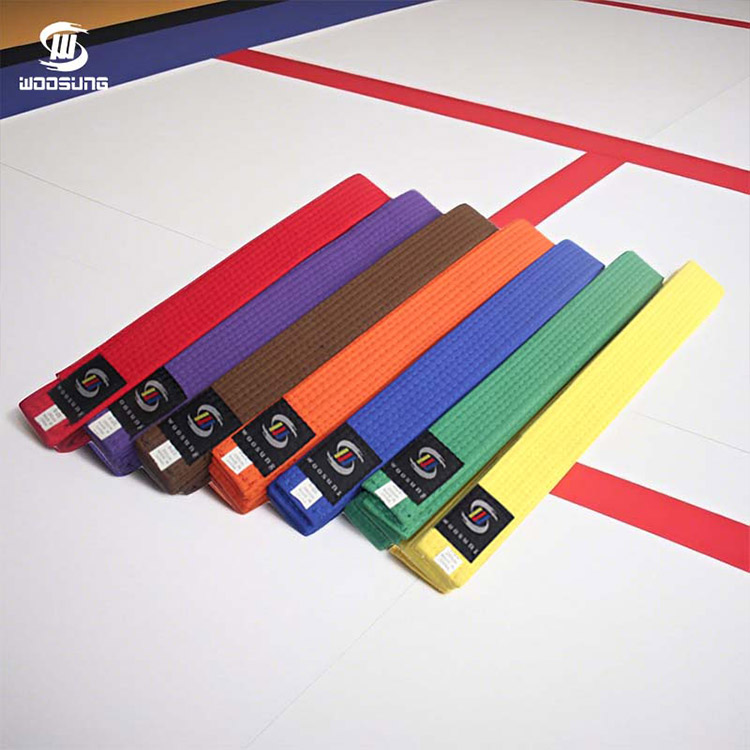
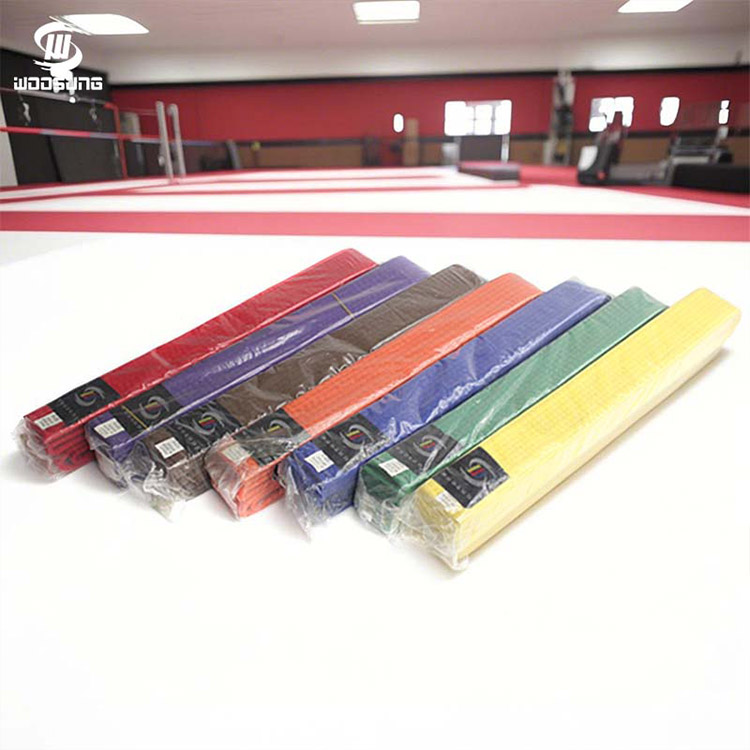
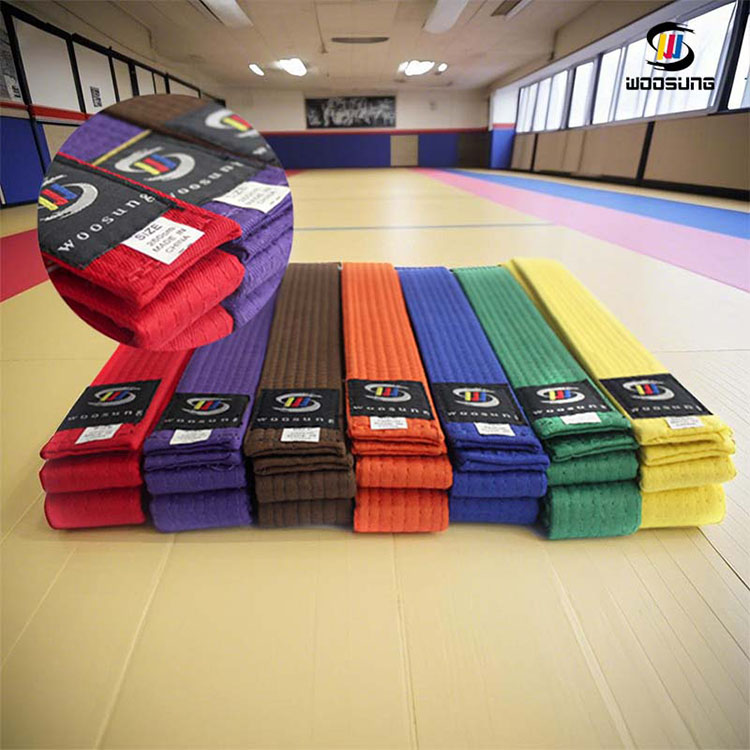
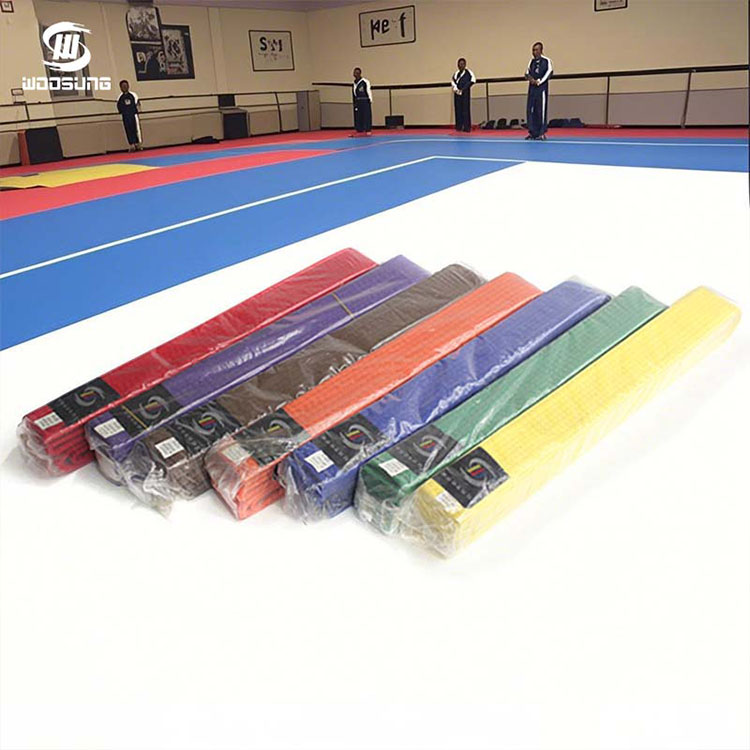
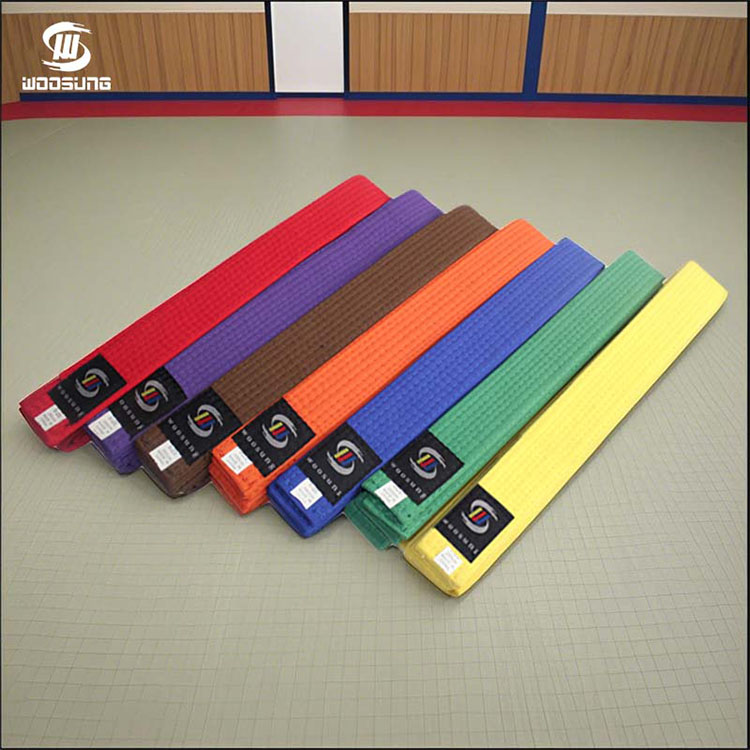
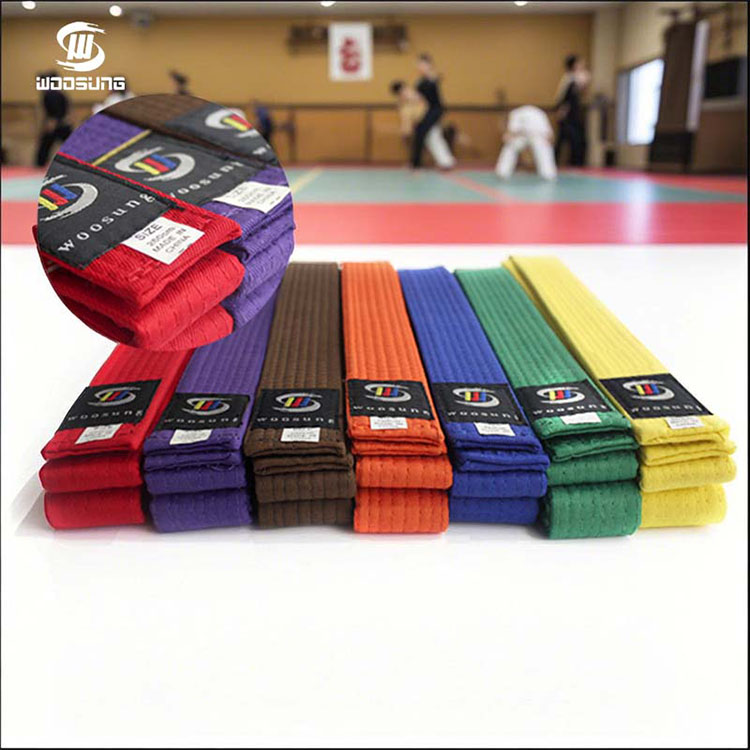
WOOSUNG Belts of Karate are far from ordinary accessories; they embody the sweat and growth of practitioners and are an indispensable core element of martial arts culture. We have been deeply involved in the martial arts equipment field for many years and understand the special significance of the belt to practitioners. From fabric selection to craftsmanship, every step is meticulously crafted to reflect the true essence of martial arts, making this belt a reliable companion on the practitioner's journey of advancement.
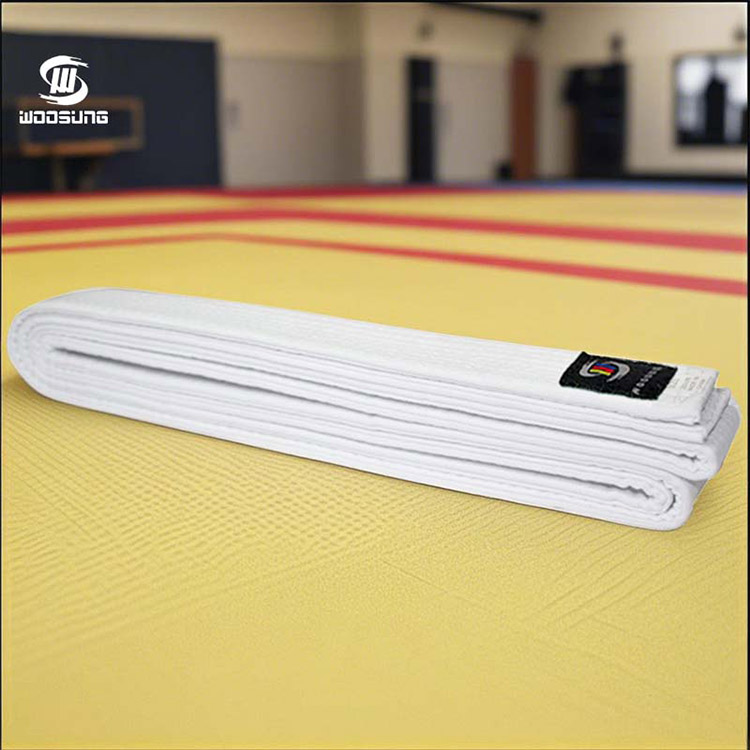
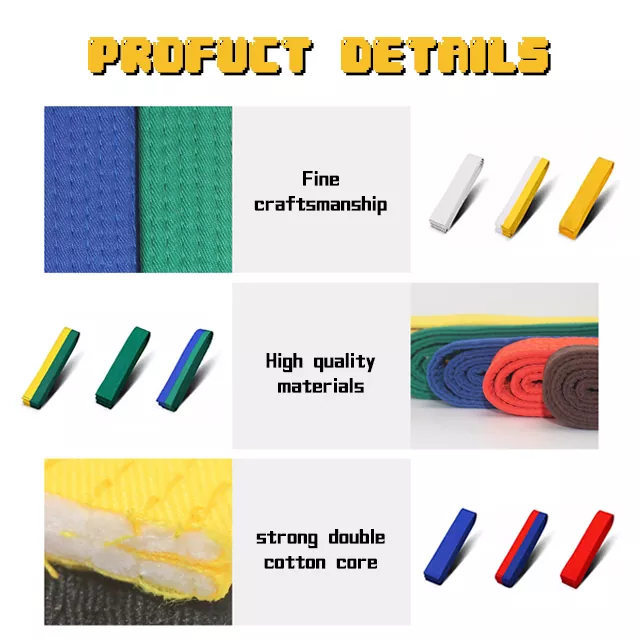
The evolution of karate belt colors is a direct reflection of the practitioner's skill and mental growth. WOOSUNG Belts of Karate strictly adhere to martial arts traditions, offering a full range of color options for all ranks: White belts symbolize the beginning and a fresh start, representing the humility and thirst for knowledge of beginners; intermediate colors such as yellow, orange, green, and blue correspond to the practitioner's mastery of basic techniques and deepening understanding of martial arts principles; brown belts signify maturity and stability in skill, a crucial milestone towards higher levels; and black belts represent transcendence and legacy, signifying that the practitioner has mastered core techniques and embarked on a new journey of exploring the essence of martial arts. For dojos with personalized color requirements, we can also customize special styles such as two-tone or striped belts, respecting the traditions of different martial arts schools.
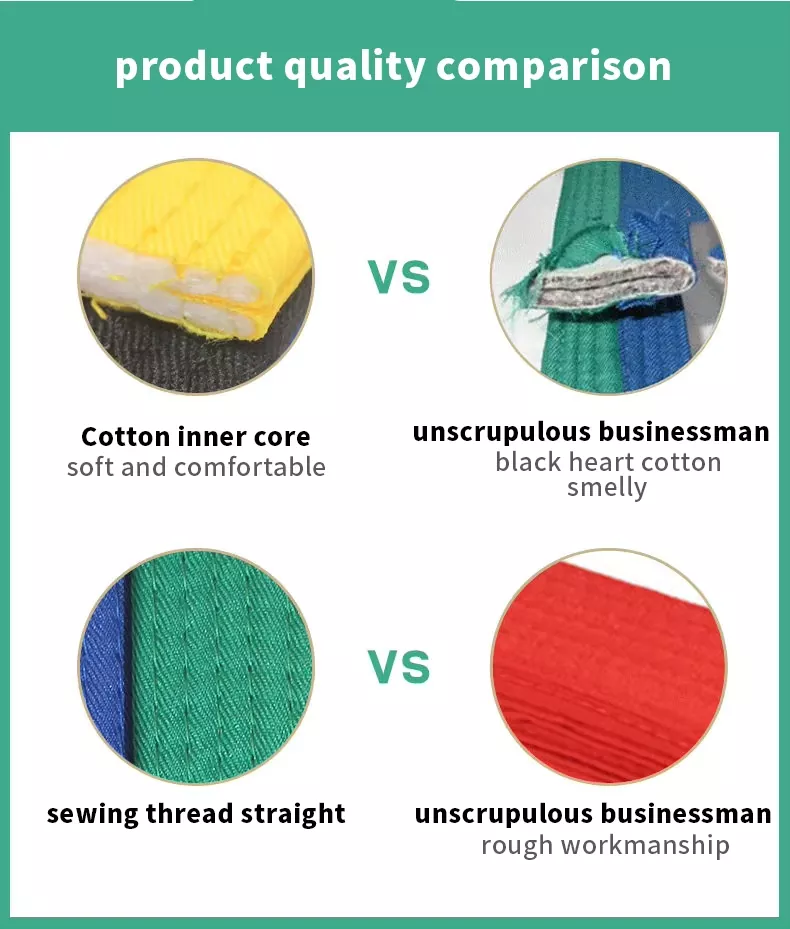
Belts of Karate utilize a layered weaving process, ensuring the belt is stiff and maintains its shape, remaining flat even after repeated tying, untying, and washing. The base material uses a blend of high-count pure cotton and polyester fiber fabric. The cotton component ensures skin-friendly breathability, reducing stuffiness during prolonged wear, while the polyester fiber enhances the belt's wear resistance and tensile strength, withstanding the wear and tear of daily high-intensity training.
The dyeing process uses environmentally friendly reactive dyes, undergoing multiple color-fixing treatments to ensure bright and vibrant colors with high color fastness, preventing color transfer to the uniform, and complying with RoHS environmental standards, ensuring no irritation to the skin. As a symbol of high rank, the black belt features increased thickness and density, and is 0.5cm wider than regular belts, emphasizing its solemnity and professionalism. The edges are reinforced with stitching to prevent wear and tear, extending its lifespan.
Following ergonomic design principles, the belt thickness is controlled at 3-4mm, ensuring stability after fastening without causing bulkiness around the waist, making it suitable for various karate uniforms. The length is precisely segmented according to height and waist circumference, ensuring that most practitioners can achieve the standard double-wrap method. After tying, the hanging ends are evenly and symmetrically positioned, conforming to martial arts etiquette. The belt surface is brushed for a delicate feel and prevents slipping when fastened, securely holding the uniform in place and allowing practitioners to focus on their movements.
| Item | Specifications |
|---|---|
| Product Name | Belts of Karate |
| Material | Cotton-polyester blend / 100% high-count cotton / Satin (optional) |
| Width | Standard: 4.0cm; Black Belt: 4.5cm (customizable) |
| Length | A0(246cm)/A1(254cm)/A2(282cm)/A3(307cm)/A4(330cm)/A5(366cm) |
| Color | White/Yellow/Orange/Green/Blue/Purple/Brown/Black (custom bi-color available) |
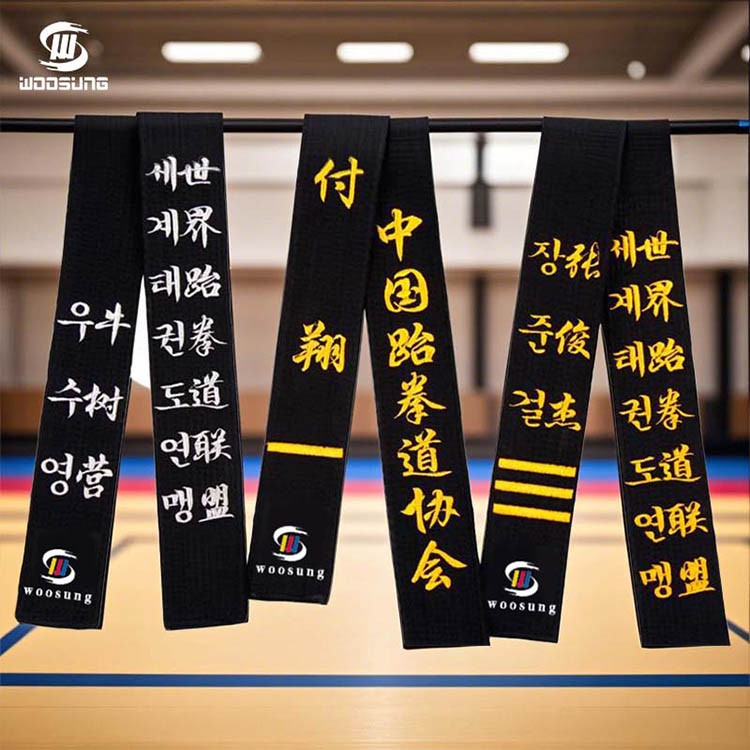
| Embroidery Option | Name/Logo/Rank Bars (Gold/Silver thread optional) |
| Dyeing Standard | Eco-friendly reactive dye, color fastness ≥4 grade |
| Certifications | CE, RoHS, ISO 9001 |
| MOQ | 10 Pairs (Customized order: 50 Pairs) |
| Customization | Embroidery, Color, Width, Length (OEM/ODM Supported) |
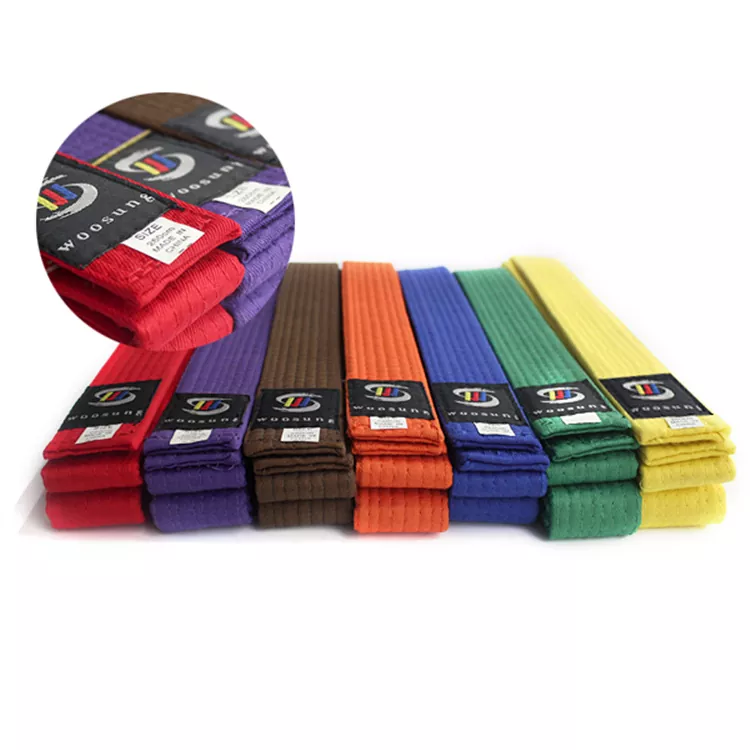
Correctly tying the WOOSUNG Belt of Karate is both a demonstration of martial arts etiquette and ensures the belt remains secure during training. The following are the steps for the standard left-starting tying method:
1. Place the belt in front of your navel, keeping it parallel to the navel. The right end should be slightly shorter, slightly longer than the hanging part after tying. Keep the right end fixed throughout the process.
2. Wrap the belt around your waist once, folding the left end upwards. Ensure the short right end remains aligned with the navel, and the belt fits snugly around the waist without wrinkles.
3. Place the long left end over the short right end, aligning the intersection with the navel. After wrapping the long end from behind, wrap it around the belt from above at the navel position.
4. Depending on your waist circumference and belt length, wrap the long end around your waist again. A standard, well-fitting belt will wrap around twice. If your waist is thinner, you can wrap it three times; if your waist is thicker, once is sufficient.
5. Pull the long end to the center of your body. At this point, the belt should be securely fitted to your waist with no looseness.
6. Pull the long end downwards from above the short end, keeping the short end facing to the right. 7. Pass the long belt through the belt loops on both sides of the waist, pulling it completely down and then back up.
8. Grasp both ends of the belt and tighten them, ensuring that the lengths of both ends are approximately equal at this point, completing the first half of the tying process.
9. Cross the two ends of the belt, as if tying a regular knot, forming a crossing point.
10. Wrap the long end around the short end, passing it through the loop formed by the crossing, repeating the regular knot-tying motion.
11. Pull the knot tightly to secure it firmly in the center of the belt.
12. Final check: The knot is centered, and the lengths of both ends hanging down are equal, ensuring that it will not loosen or come undone during training, and that it conforms to martial arts etiquette.
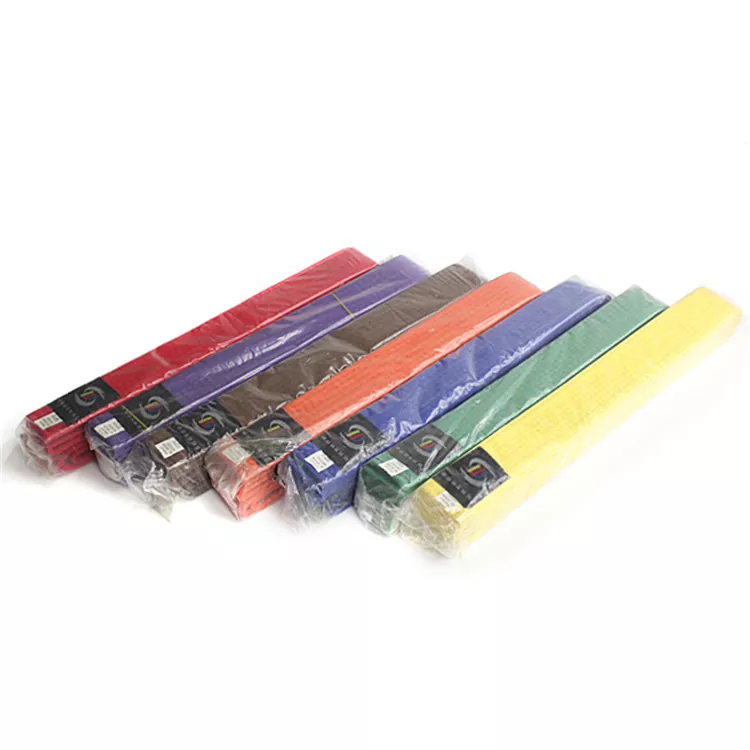
For pure cotton and blended fabric belts, hand washing is recommended at a water temperature not exceeding 30℃. Use a neutral detergent and avoid machine washing and vigorous rubbing to prevent deformation and fraying.
Wash separately for the first wash to avoid mixing with other clothes and reduce the risk of staining; air dry naturally after washing, and avoid direct sunlight to prevent fading and hardening of the material.
It is not necessary to wash the belt after every training session; washing 1-2 times a month depending on sweating is sufficient. Excessive washing will shorten the belt's lifespan.
When washing embroidered belts, avoid rubbing the embroidered areas. Gently smooth the embroidery after drying to maintain the integrity of the embroidered pattern.
After daily use, hang the belt in a well-ventilated and dry place to remove sweat and moisture; regularly check the edge stitching and embroidered areas. If there is fraying or severe wear, replace the belt promptly to ensure safety and proper etiquette. In traditional martial arts, the wear marks on the belt are a testament to training, but if they affect safety or appearance, it is recommended to replace it with a new WOOSUNG karate belt.
Q1: How to choose the right belt length?
A1: We recommend choosing the size based on your height and waist circumference. Choose A0 for heights 120-140cm, A1 for 140-160cm, A2 for 160-175cm, A3 for 175-185cm, A4 for 185-195cm, and A5 for heights above 195cm. If your waist circumference is larger than average, you can choose one size larger. If you are unsure, please provide your height and weight, and we will recommend the most suitable size for you.
Q2: What information is needed for custom embroidery?
A2: You need to provide the embroidery content (name, logo, slogan, etc.), embroidery location (both ends/sides of the belt), thread color (gold/silver/black), and font style. If you have special requirements, you can provide a design drawing. We support free multi-language translation and layout optimization.
Q3: How long does the color fastness of the belt last?
A3: We use environmentally friendly reactive dyes and multiple color-fixing processes, resulting in a color fastness of ≥4. Under normal use and maintenance, there will be no significant fading within 1-2 years, meeting the needs of daily training and competitions.
Q4: Are there discounts for bulk purchases, and what is the delivery time?
A4: There are tiered discounts for bulk purchases; the larger the quantity, the greater the discount. For specific quotes, please contact customer service and provide your purchase list for calculation. In-stock orders will be shipped within 1-3 business days after payment. Custom orders depend on the customization requirements and quantity, generally delivered within 7-15 business days.
Q5: Do you support exports, and can you provide customs clearance documents?
A5: Yes, we support exports. Our products have been exported to over a hundred countries and regions in Europe, America, Japan, and South Korea. We can provide a full set of export documents, including CE and RoHS certification reports, customs declarations, and commercial invoices, to ensure smooth customs clearance.
Address
Liucun, Xushui Country, Baoding City, Hebei Province, China
Tel